Why Arlington water heaters work harder than you think
Anyone who has lived in Arlington through a July knows the water supply here can carry a lot of sediment, and a lot of mineral content too. Over time that material settles at the bottom of the tank. The burner or heating element then has to work through a layer of gunk to heat the water, and that extra strain shows up as noisy operation, slow recovery, and eventually a leak.
Most of the water heater calls our team handles in Arlington and nearby neighborhoods could have been spotted months earlier. The good news is that the fixes are mostly simple. They take an afternoon, a garden hose, and a little patience. Here is the checklist we would walk through with a neighbor who asked us over the fence.
The prevention checklist
Work through these in order. Some take five minutes, others take an hour, and a few are worth handing to a plumber if you feel unsure.
- Check the temperature setting. Most tanks ship set around 120 degrees Fahrenheit. Going much higher speeds up mineral buildup and wears the tank faster. Going lower can let bacteria grow. Somewhere in the 120 to 125 range is a reasonable target for most households.
- Look at the pressure relief valve. Put a bucket under the discharge pipe and lift the lever for a second or two. If nothing comes out, or the valve keeps dripping afterward, call a plumber before it becomes a bigger problem.
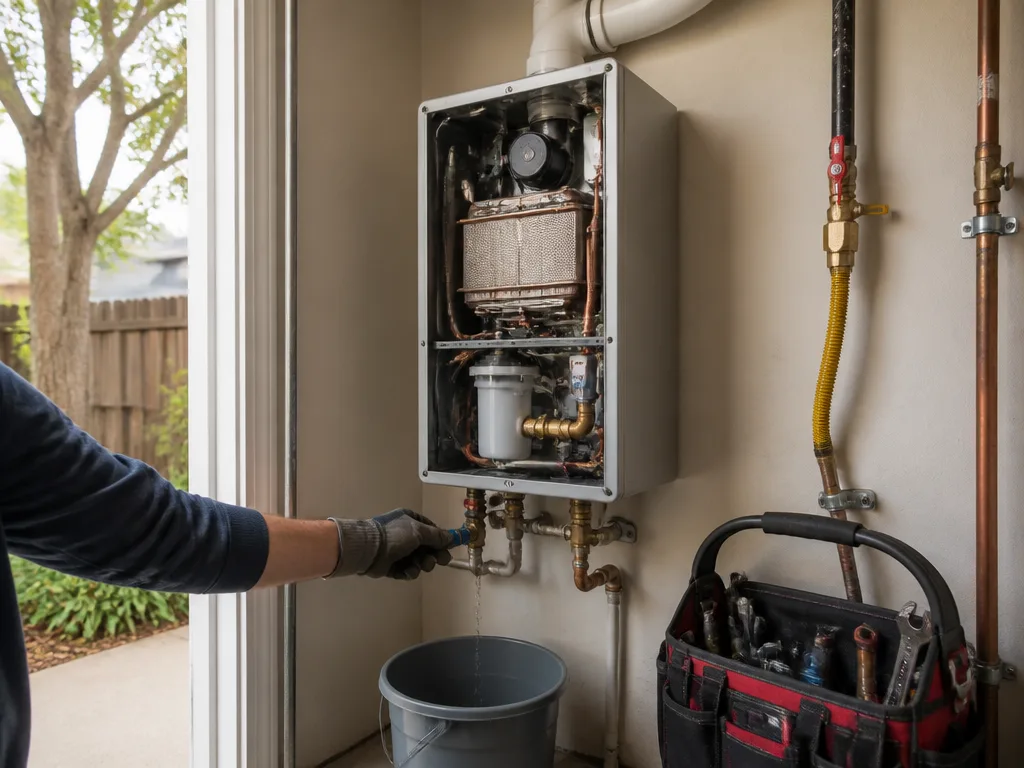
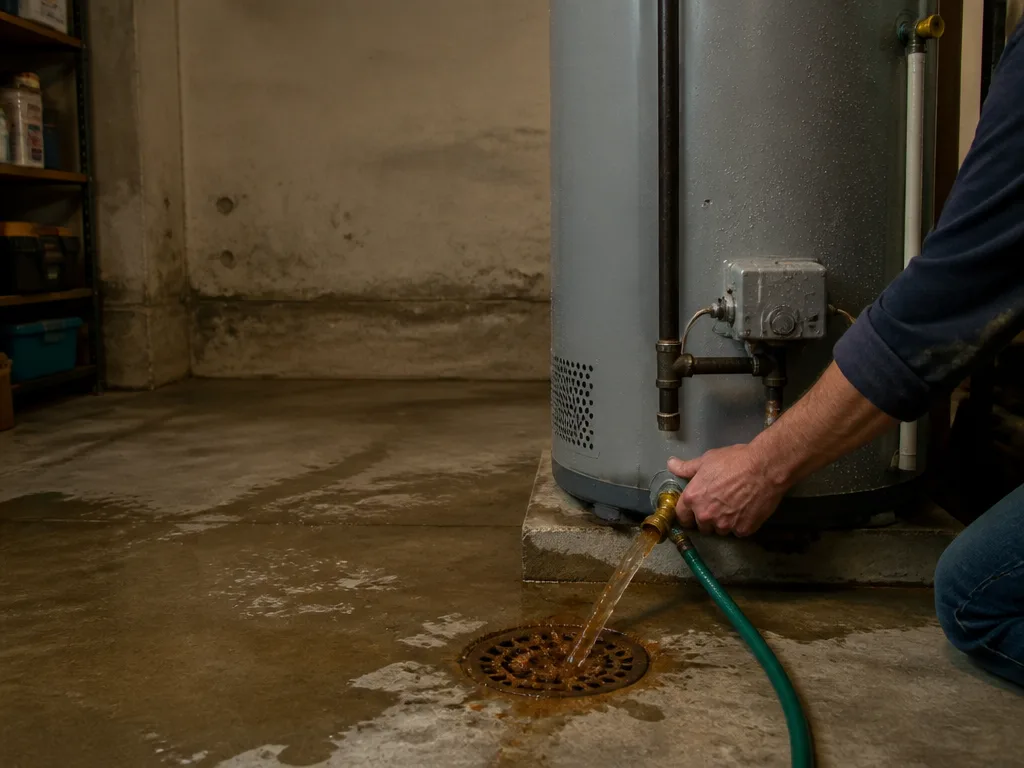
- Flush the tank once a year. Shut off the power or gas, connect a hose to the drain valve at the bottom, and let the water run until it runs clear. Arlington sediment loads vary street by street, so you may find that your tank needs this more often than once a year.
- Inspect the anode rod. This sacrificial rod pulls corrosion away from the tank walls. When it wears down to a thin wire, the tank itself starts to rust. Pulling the rod takes some clearance above the heater, so plan for that.
- Walk around the base. Look for water stains, white crust on the fittings, or damp spots on the floor. A slow drip at a connection is far cheaper to fix than the water damage it leaves behind.
Small habits that add up
Some of the best prevention happens outside the tank. Water heaters in Arlington homes often run harder than they should because of problems elsewhere in the house.
Watch the water pressure
High water pressure pushes harder on every fitting in the system, including the ones on your heater. If you have a pressure gauge handy, a reading above 80 psi is a good reason to have a plumber look at the main regulator. Pressure that spikes overnight can be a sign of a failing regulator, and that is worth catching early.
Keep the area around the heater clear
Stacked boxes, stored paint, and laundry piled against the tank make it harder to reach the valves and the access panel. When you need to shut the water off in a hurry, you want a clear path. Keep at least a couple of feet of open space in front of the unit.
Limit long hot water runs
Running the shower for twenty minutes while you wait for it to warm up is not really a problem for the tank, but repeated heavy use does push the heater through more cycles. If your household uses hot water in bursts, a timer on the unit or a quick check of the thermostat can even things out.
When to call in a plumber
Some warning signs should not wait for your next checklist day. If you hear popping or rumbling that keeps getting louder, if the water runs lukewarm even at the highest setting, or if you notice rust-colored water coming from the hot side only, shut off the power or gas and call a plumber. Our team sees these patterns often enough that a short phone call usually tells us whether it is a quick adjustment or a repair that needs a visit.
Do not try to fix a leaking tank yourself. A tank that is leaking from the body usually cannot be patched, and the sooner it is assessed, the fewer options you may have to weigh. If you are already smelling gas or see water pooling near a gas line, leave the area and call from outside.
Keep a simple log
Pick one day a year, maybe the first warm weekend in spring or the week your smoke alarms get their battery swap, and run through the list. Write down the date, the temperature setting, and anything unusual you noticed. After two or three years you will have a clear picture of how your particular tank behaves in your particular Arlington house, and you will be able to spot changes much sooner.
If anything on this list makes you uncertain, give Arlington Commercial Plumbing a call and describe what you are seeing. Our team will tell you plainly what it sounds like and what the next step should be. Most homeowners would rather have that conversation before a water heater fails on a Monday morning than after.